Cursed House Multiplayer 2
- 4.2
- Rating
- 5.00M
- Installs
- Free
- Price
 Analysis by App-foxy
Cursed House Multiplayer 2 is the kind of role-playing game I opened expecting a quick look and ended up judging mainly by its mood. It presents itself as a sequel to Cursed House Multiplayer, but its strongest first impression is not a complicated menu system or a huge list of features. It is the feeling that something is wrong inside the setting, and that moving forward means paying attention rather than simply tapping through battles.
That makes it an interesting choice for players who want a darker mobile adventure with a social angle, but it is not automatically the best fit for anyone searching for a fast, endlessly rewarding action game. I found the experience most appealing when I treated it as a compact haunted-house role-playing journey: explore, notice the details, manage the pace, and accept that the atmosphere is part of the challenge.
The game is free to start, with optional in-app purchases ranging from $1.49 to $3.99 per item. It carries an Everyone 10+ age rating, so its unsettling presentation is aimed at a broad audience rather than extreme horror fans. The developer is SUSSY BAKA DEV, and the current version is 1.2.9. It has already passed five million installs and holds a 4.2 average from around sixteen thousand ratings, which suggests that the multiplayer concept and eerie presentation have found a sizeable audience.
You May Also Like

 Blood Strike: 2.5 Anniversary
Blood Strike’s Loadouts Turn Every Drop Into a Tactical Gamble
A close look at Blood Strike’s custom loadouts: how fast access to signature weapons reshapes its battle royale rhythm, rewards preparation, and narrows the gap between fights.

 Pandora - Music & Podcasts
Pandora’s Music Is Easy to Start, but Harder to Recover
Pandora’s strength is its low-effort path from a seed to a station. Its weak spot is how much confidence it asks you to place in connection, setup, and quiet recovery.

 8 Ball Pool
 Is Built on Rivalries, Rematches, and Routine
A close look at the rivalries, rematches, shared routines, and unanswered safety questions that turn a quick pool match into a persistent mobile community.

 Samsung Music
’s Quiet Strength Is Playing What You Already Own
Its reach comes less from spectacle than from dependable access to a personal library. That simplicity is both the app’s strongest retention engine and its ceiling.

 AccuWeather: Weather Radar
AccuWeather Review: A Quick, Clear Forecast for Everyday Decisions
For everyday plans, the best forecast is the one you can understand quickly. AccuWeather makes rain timing, radar, and local conditions easy to act on, with a few trade-offs.

 Hill Climb Racing
Why Hill Climb Racing Still Turns Crashes Into One More Run
A tiny car, a bumpy hill and one more upgrade: Hill Climb Racing keeps resurfacing because its simple chaos makes every near-miss feel personal.
More From Our News Desk



How the haunted setting shapes the first impression
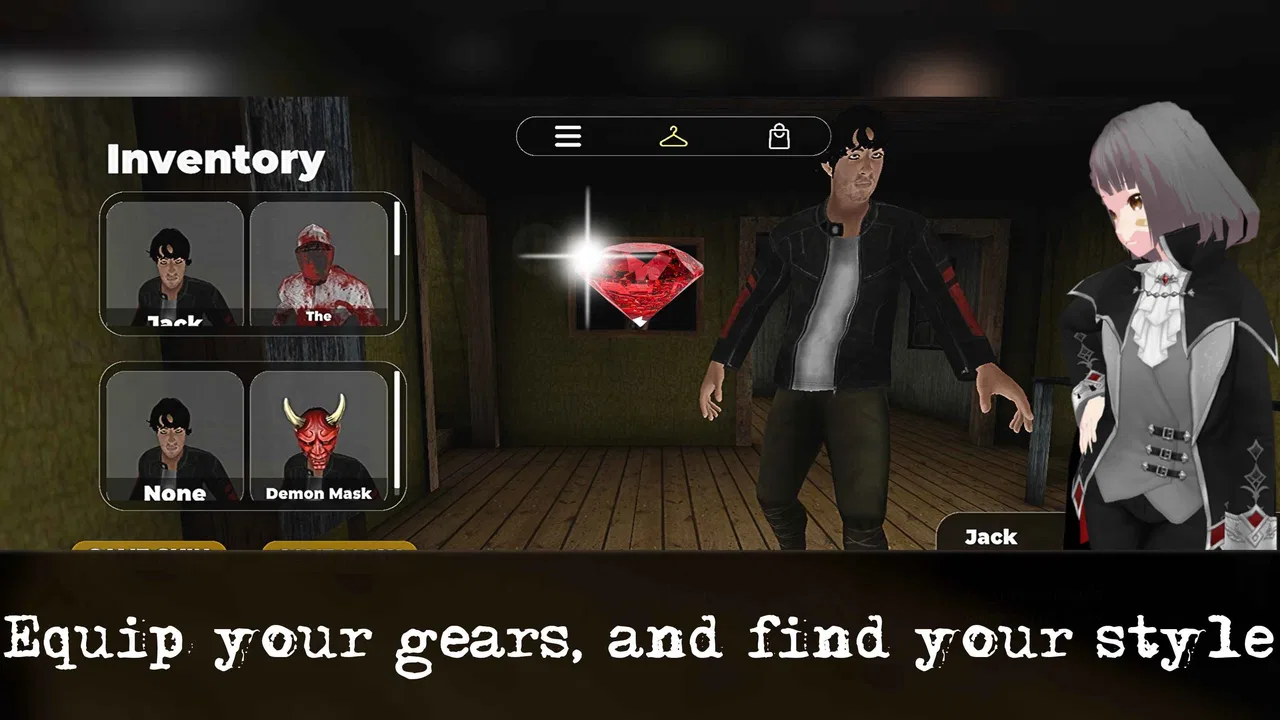
My first reaction was that Cursed House Multiplayer 2 understands the value of a recognizable visual identity. The title promises a cursed location, and the game leans into that idea instead of presenting a bright, interchangeable fantasy world. Rooms, corridors, and threatening spaces feel connected by a common visual language. Even before I had a clear sense of the larger objective, I knew what kind of place I was in.
That consistency matters on a phone. A small screen can make a busy role-playing game tiring, especially when every area uses different colors, icons, and effects. Here, the haunted setting gives the presentation a useful anchor. The darker look helps the game feel like one journey rather than a collection of unrelated stages.
The strongest early quality is cohesion rather than spectacle. I did not read the art direction as an attempt to compete with large console horror games. Instead, it works within the limits of a mobile role-playing format and uses the cursed-house idea to make ordinary progression feel more suspicious. A new room or encounter is more interesting when I am already wondering what the environment is hiding.
That approach also makes the game easier to recommend to someone who enjoys spooky fiction but does not want an intensely graphic horror experience. The age rating of Everyone 10+ is important here. The mood can be ominous, but the game is better understood as accessible supernatural entertainment than as a harsh survival-horror simulation.
One practical point became clear quickly: this is not a game I would choose when I want to play with the sound off while watching television. The setting does some of its work through presentation, timing, and the sense that an encounter belongs to a particular place. It can still be played casually, but the atmosphere loses some of its purpose when reduced to background tapping.
A visual style that supports exploration
The art direction does more than decorate the haunted setting. It gives me a reason to slow down and read the situation before acting. In a conventional mobile RPG, I often scan the screen for the brightest button or the most valuable reward. In this game, the darker presentation encourages a different habit: I look at the whole scene first, then decide what deserves attention.
That is a small design success. It turns visual mood into a playable quality. The environment is not merely a wallpaper placed behind mechanics; it helps establish the expectation that progression may involve uncertainty. When the game is working well, I feel as though I am entering a place with its own rules rather than selecting another item from a level map.
There is a trade-off, though. A moody visual style can make information less immediately readable than it would be in a brighter, more conventional interface. Players who prefer clean menus, high contrast, and instant feedback may need a little patience. I sometimes wanted the game to communicate the practical next step more directly instead of making me absorb the atmosphere first.
That tension is central to the experience. The same visual restraint that gives the game character can also slow down the first few sessions. I think it is worth accepting if the setting is the reason you are interested, but it may frustrate players who see role-playing games mainly as efficient progression systems.
Why the sequel identity matters
Because this is the sequel to Cursed House Multiplayer, returning players are likely to approach it with expectations about the tone and the multiplayer premise. I would not treat it as a completely unrelated new role-playing game. Its appeal comes partly from continuing an established cursed-house concept, so people who enjoyed the earlier title have a natural reason to try it.
For newcomers, the more useful question is whether the game communicates its own mood without requiring a long explanation of the previous entry. In my experience, the setting does enough of that work on its own. I could understand the basic invitation: enter a dangerous supernatural place, deal with what it presents, and share the experience where the multiplayer design makes that worthwhile.
Still, sequel branding can create a particular expectation. If you are looking for a massive reinvention, this may feel more like a refinement of a known idea than a total change of direction. I see that as a strength for fans and a possible limitation for players who want a radically different role-playing structure.
Sound, pacing, and the feeling of moving through danger
The sound design is most effective when it supports the environment instead of trying to dominate it. A haunted setting needs room for silence, pauses, and small changes in emphasis. If every moment were filled with loud effects, the mood would become ordinary. Cursed House Multiplayer 2 benefits from allowing the setting to feel uneasy rather than constantly announcing that it should be frightening.
I found that the game’s rhythm works best in short sessions where I can give each encounter some attention. The pacing is not built entirely around rapid rewards. There is a push and pull between wanting to see what comes next and wanting to understand what is happening now. That makes the game feel closer to an atmospheric adventure than to a simple reflex test.
This rhythm also affects multiplayer. Playing alongside others can make a tense space feel more manageable, but it can also change the mood. A companion’s presence adds energy and reduces isolation, while a solo session preserves more of the haunted-house feeling. I would choose based on what I want from that particular session rather than assuming multiplayer is always superior.
My practical tip is to treat the game’s pacing as part of its difficulty. Rushing because a room looks familiar can make the experience feel flat and may cause me to miss the reason the scene was presented that way. Taking a moment to identify the immediate objective, check the available choices, and notice the environment produces a more satisfying flow than tapping through every prompt as quickly as possible.
That advice is especially useful for everyday play. If I have ten minutes before an appointment, I can use the game for a focused visit rather than expecting a complete story beat. If I have a longer uninterrupted session, the atmosphere has more time to build. The game is flexible enough for both habits, but it rewards attention more than distracted play.
When the mood helps and when it gets in the way
The setting creates a useful contrast with the usual bright mobile RPG. Many alternatives make progress feel like a checklist: collect resources, improve a character, clear a stage, and repeat. Cursed House Multiplayer 2 is more memorable because its presentation gives those actions a sense of place. Even routine movement can feel connected to the larger idea of a cursed house.
On the other hand, players who mainly want constant combat, rapid character growth, or a colorful collection system may find the atmosphere too slow. The game’s identity depends on restraint, and restraint can be mistaken for a lack of content if someone approaches it with the expectations of a traditional grind-heavy RPG.
I would also avoid judging it only by the number of minutes it can fill. Its value is not simply how long I can keep repeating an activity. The better question is whether the combination of setting, social play, and role-playing progression gives me a reason to return. For me, the answer is yes when I want a spooky change of pace, but less so when I am looking for a competitive daily routine.
How the mechanics fit the haunted-house idea
The role-playing structure works because it gives the setting consequences. Exploration alone can create tension, but mechanics determine whether that tension survives after the first impression. In Cursed House Multiplayer 2, I pay attention to progression because it affects how prepared I feel for the next part of the journey. The game is more engaging when I make choices with the environment in mind instead of treating every encounter as an isolated screen.
The multiplayer focus is the clearest difference from a standard solo role-playing alternative. A solo game can provide control over every decision and let me move at my own speed. This title is more appealing when I want the cursed-house theme to become a shared activity. It gives a friend a reason to take part in the same eerie setting rather than merely comparing progress afterward.
That does not mean multiplayer automatically removes friction. Shared play depends on both people being in the mood for the same pace. One player may want to inspect the environment while the other wants to move forward. In a game built around atmosphere, that difference matters more than it would in a purely competitive match. I recommend agreeing beforehand whether the session is about exploring carefully or progressing quickly.
There is also a useful trade-off between accessibility and depth. The game is approachable enough for a broad age group, and the free entry point makes it easy to test with friends. But players expecting the complexity of a large role-playing game may want more elaborate systems, deeper long-term planning, or a more demanding character-building loop. I would describe this as a focused mobile experience rather than a replacement for a full-scale RPG.
Small decisions that improve a session
One non-obvious strength is how much better the game feels when I separate exploration from optimization. On a first visit, I try to understand the location and the rhythm of encounters instead of immediately chasing the most efficient route. On later visits, I can make more deliberate choices because I already know which parts of the setting deserve extra attention.
A second useful habit is to avoid spending simply because a purchase is available. The optional items cost between $1.49 and $3.99 each, which makes them relatively easy to justify in the moment. I would first learn whether the game’s normal progression already suits my pace. Spending should solve a specific annoyance, not become an automatic response to a tense encounter or a slow section.
A third insight concerns session length. The game’s atmosphere is strongest when I stop before it becomes visual noise. Short, focused sessions let the setting remain distinctive. If I continue only because I feel obligated to complete another task, the mood turns into routine. That is not a flaw unique to this title, but it is particularly noticeable here because atmosphere is one of its main selling points.
Finally, I would introduce the game to friends who enjoy cooperative discovery rather than friends who only want a highly competitive challenge. The cursed-house concept works as a conversation starter: you can discuss what you noticed, where you hesitated, and how the shared session felt. That social after-effect is more valuable than simply having another game installed on the same devices.
Who should choose it over a usual mobile RPG?
I would recommend it to players who want a role-playing game with a clear supernatural identity, a shared-play premise, and a pace that leaves room for mood. It is also a good option for someone who has become tired of bright fantasy menus and repetitive progression loops but still wants something more approachable than a serious horror game.
I would point a different player toward another type of RPG if they want deep solo strategy, a large competitive ecosystem, or constant action. A conventional turn-based game may be better for someone who enjoys planning every move without depending on another person. A faster action RPG may suit someone who sees atmosphere as a distraction from combat.
The game is also not my first recommendation for very young children despite its broad age rating. The Everyone 10+ label signals that the cursed setting and unsettling tone are intended for an older audience than simple all-ages entertainment. Parents choosing it for a shared device should consider whether that kind of mood is comfortable for the child.
Device compatibility is reasonably welcoming for an older Android audience because it supports Android 6.0 and later. That does not guarantee identical performance on every phone, but it does make the game more accessible than titles that require a recent operating system. I would still keep expectations realistic on older hardware: a game with atmospheric visuals and online interaction may feel less comfortable on a small, slow device than on a newer phone.
My final atmosphere verdict
Cursed House Multiplayer 2 succeeds when its art direction, sound, setting, and pacing work together. The haunted-house theme is not just a label placed over a familiar role-playing framework. It influences how I look at each area, how quickly I want to move, and whether I prefer to experience the game alone or with someone else.
Its limitations are closely tied to those same choices. The pace may feel restrained beside faster mobile RPGs, the darker presentation can ask for more attention than a bright menu-driven game, and multiplayer works best when everyone agrees on the session’s rhythm. Players searching for a huge, endlessly complex role-playing system should keep looking.
For me, the best use case is a short evening session with a friend who enjoys eerie settings and does not need constant action. I can start for free, learn whether the mood fits me, and decide later whether optional purchases add anything meaningful to my routine. The existing audience, with over five million installs and a 4.2 average, makes it clear that the concept has broad appeal without changing the fact that its style will not suit everyone.
I recommend Cursed House Multiplayer 2 as a mood-first mobile RPG, not as a universal replacement for every role-playing game. If you want a coherent cursed setting, accessible shared play, and a slower rhythm that lets the environment matter, it is worth trying. If you want maximum speed, deep solo systems, or a relentlessly competitive loop, another game will probably serve you better. Its real achievement is that the mechanics usually remember what kind of place they are happening in, and that gives the whole experience a personality many mobile RPGs never quite find.
FAQs for Cursed House Multiplayer 2
01What is Cursed House Multiplayer 2 about?
Cursed House Multiplayer 2 is a thrilling multiplayer horror game where players must navigate a haunted house filled with eerie challenges and supernatural entities. Your objective is to survive the night with your friends by solving puzzles and avoiding the haunted spirits that roam the halls. With its atmospheric graphics and spine-chilling sound effects, it offers an immersive gaming experience.
02Is Cursed House Multiplayer 2 available on both Android and iOS?
Yes, Cursed House Multiplayer 2 is available for download on both Android and iOS platforms. You can find it on the Google Play Store for Android devices and the Apple App Store for iOS devices. Ensure your device meets the minimum system requirements for optimal gameplay.
03Does Cursed House Multiplayer 2 require an internet connection to play?
Cursed House Multiplayer 2 is designed as a multiplayer experience, which means an internet connection is required to play with others. However, some elements of the game may be accessible offline, allowing you to explore certain features or levels without a connection. For the full experience, playing online is recommended.
04Are there in-app purchases in Cursed House Multiplayer 2?
Yes, Cursed House Multiplayer 2 includes in-app purchases. These can enhance your gameplay by unlocking special items, characters, or additional levels. While the game is free to download, these purchases can offer a more enriched experience. However, they are not mandatory to enjoy the core gameplay.
05Is Cursed House Multiplayer 2 suitable for all age groups?
Cursed House Multiplayer 2 is rated for mature audiences due to its horror themes and intense gameplay. It includes elements that may be frightening for younger players, such as jump scares and eerie environments. Parents should consider these factors when deciding if the game is appropriate for their children.
Pros
- Engaging multiplayer experience.
- Unique and challenging puzzles.
- Atmospheric graphics and sound.
- Regular updates with new content.
- Easy to connect with friends.
Cons
- Requires constant internet connection.
- Occasional server lag issues.
- Limited solo gameplay options.
- Minor in-app purchase incentives.
- Somewhat steep learning curve.

Cursed House Multiplayer 2
Gallery